

The Fascinating History of Cats
The origin and spread of cats is a complex process spanning over 10,000 years, involving agricultural civilizations, cross-cultural exchanges, and species domestication. Below are key conclusions from interdisciplinary research:
1. Common Origin of Domestic Cats Worldwide
Domestication of African Wildcats: The direct ancestor of modern domestic cats (Felis catus) is the African wildcat (Felis lybica) from the Near East and North Africa. Around 10,000 years ago, humans in the Fertile Crescent began settled farming; stored grains attracted rodents, and wildcats formed a commensal relationship with humans by hunting rodents, gradually being domesticated. The earliest archaeological evidence is a 9,500-year-old grave in Cyprus, indicating humans had brought cats across the sea to live with them.
Cat Culture in Ancient Egypt: Around 4,000 years ago, ancient Egyptians systematically tamed cats, deifying them as incarnations of Bastet, the moon goddess. Cats held a high status in Egyptian society—laws protected their lives, and killing a cat was punishable by death. Numerous cat images in Egyptian art and the discovery of mummified cats confirm their religious and cultural significance.
2. Path and Time of Domestic Cats Entering China
Early Misidentification: Commensal History of Leopard Cats: Small feline remains found at archaeological sites in China from the Neolithic Age to the Eastern Han Dynasty (e.g., Quanhucun in Shaanxi) were once mistaken for domestic cats. Recent DNA research confirmed these were leopard cats (Prionailurus bengalensis), which had lived commensally with humans for at least 3,500 years, hunting rodents but never being domesticated.
Introduction via the Silk Road in the Tang Dynasty: Genetic Evidence: Domestic cat remains unearthed at the Tang Dynasty site of Tongwancheng (about 1,200 years ago) are the earliest conclusive record in China. Genome analysis shows kinship with domestic cats from the Central Asian site of Jankent and the Near East, confirming domestic cats entered via the overland Silk Road. Social Background: Wars at the end of the Han Dynasty led to leopard cats withdrawing from human settlements. After agricultural revival in the Tang Dynasty, well-domesticated cats replaced leopard cats due to their docility and adaptability. The popularization of caged chickens recorded in "Qi Min Yao Shu" (Essential Techniques for the Welfare of the People) may have accelerated the expulsion of leopard cats for stealing poultry.
Cultural Acceptance: The Tang court set up "cat attendants" to take charge of cats; during Wu Zetian’s reign, cats became pets of nobles. In the Song Dynasty, cat markets, cat paintings, and poems by cat lovers like Lu You emerged. In the Ming and Qing dynasties, monographs such as "Mao Yuan" (Garden of Cats) systematized cat culture, reflecting the shift from practical rodent hunting to emotional companionship.
3. Differences in Domestication Paths Between East and West
Ancient Egypt and Europe: Cats spread rapidly due to religious sanctity but were persecuted in the Middle Ages for their association with "witches," later regaining popularity as companion animals in modern times.
China: Native leopard cats were never domesticated. Domestic cats, as "exotic species," were introduced through trade and eventually integrated into daily life and cultural aesthetics. Tang Dynasty murals and genome restoration show white or spotted tabby cats may have been artificially selected and retained for meeting East Asian aesthetic preferences.
4. Global Impact of Modern Domestic Cats
Today, domestic cats are one of the most successful domesticated species globally. Their history reveals the dynamic evolution of the human-animal relationship: from mutualistic commensalism to emotional dependence, from regional species to global "cute pets." The different fates of leopard cats and domestic cats demonstrate the dual role of niche competition and sociocultural selection in the domestication process.
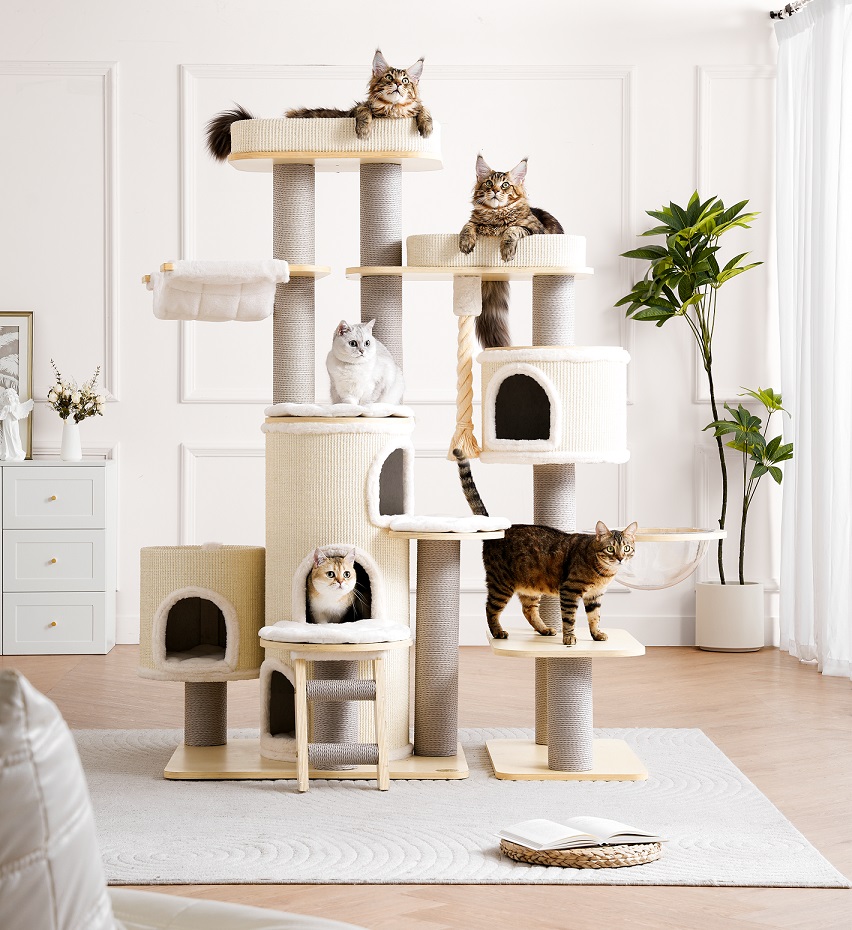
#petsbellecattree #cattree #catlove #Petproducts #catscratcher #sisalscratching #cattower #catplay
Previous: Happy New Year 2026